Patient 75View case

Procedures
A hairline set too high, a facelift scar, a widening parting, an edge worn away by traction. Five situations, and the ones we do not operate on.
A transplant in a woman is not a male transplant scaled down. The pattern of loss is different, the hairline is drawn differently, the donor area is often affected too, and the hormonal question arises every time. Some female requests involve no disease at all: a naturally high forehead, a cosmetic surgery scar, temples worn thin by years of styling.
On top of that comes a practical constraint men do not face, and one that often decides everything: nobody should be able to guess at the procedure when the patient leaves the clinic. That is why the recipient area is never shaved in women, and why trimming of the donor area is limited to a strip the hair above covers.
What we treat
Each calls for a different strategy, a different number of grafts, and sometimes medical treatment before any surgery.
A high forehead is not a disease, it is a proportion. Some women have had one all their lives and find it hard to live with: constrained hairstyles, a fringe by obligation, photographs avoided. A transplant brings the hairline down by one to three centimetres depending on the capital available, drawing a feminine line, rounded in the middle and softened at the temples.
A facelift moves the temporal hairline backwards and leaves a scar in front of the ear or within the scalp. The lift itself may be excellent and this area still give it away. Grafts placed in and around the scar make it invisible, and restore the sideburn.
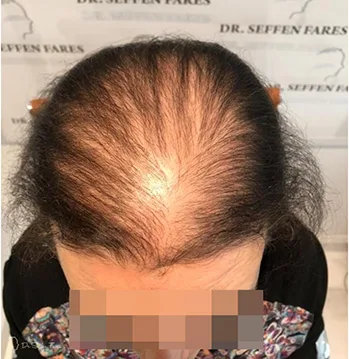
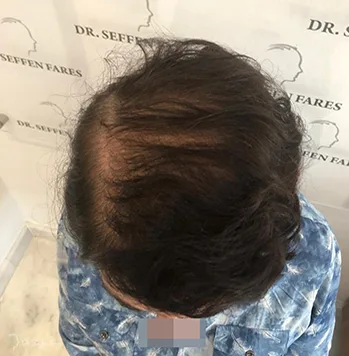
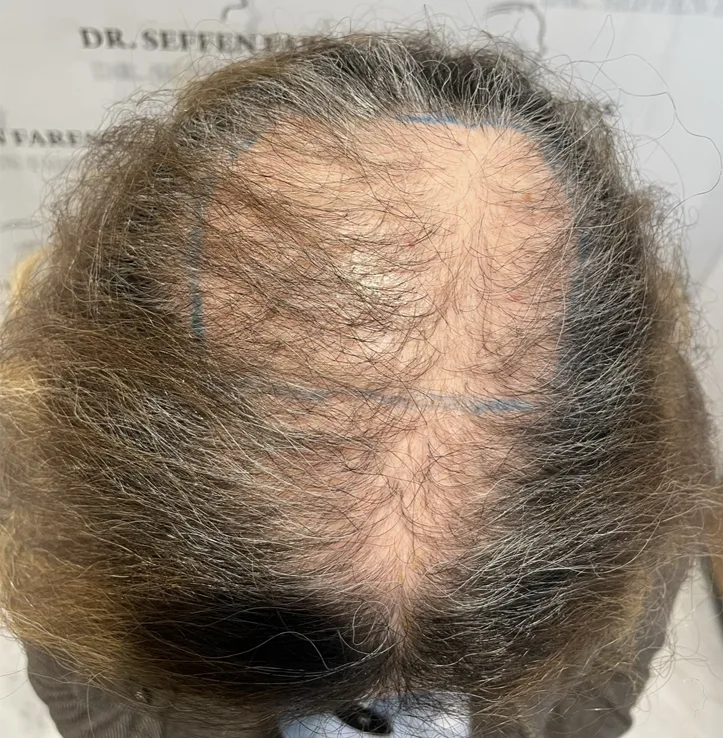
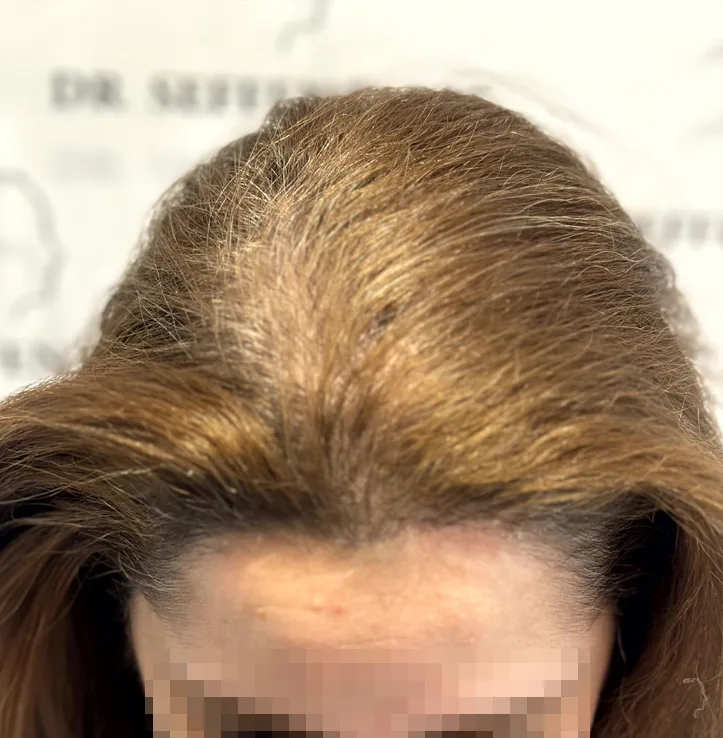
The parting widens, density falls across the top of the scalp, the frontal hairline often stays in place. It is the most common reason for consulting, and the one where selection matters most: the donor area may be affected too, which limits what can be harvested.
Tight braids, extensions, weaves, buns pulled back for years. The hairline recedes at the temples and around the edges, where the pull is applied. Reversible early on, it becomes permanent once the follicle has been destroyed.
The area women most often point to in the mirror, and one that medical treatment does not reach. Few grafts are needed, but the angle is very shallow and the work finer than elsewhere.
No visible shaving
It is the first objection, and the most legitimate one. A woman cannot turn up at work on Monday with a shaved head, and many give up on surgery for that reason alone.
There is no need to. The recipient area is never shaved: grafts are placed between the existing hairs, which takes longer and demands a steadier hand, but leaves the hairstyle intact. Only the donor area at the back has to be trimmed in order to be harvested, and that trimming is limited to a horizontal strip which the hair above covers completely once let down.
Leaving the clinic with hair loose, nothing shows. The crusts over the transplanted area come away within ten days or so, and a fringe or a shifted parting is enough to cover them meanwhile.
The consultation
In women, examination precedes any proposal even more than in men, because the causes of loss are more numerous and often reversible. Recent diffuse shedding is almost never a surgical indication.
Shedding that follows childbirth, a diet, a high fever or a shock: it regrows by itself within six to twelve months. Diffuse loss present for less than a year and unexplained. Frontal fibrosing alopecia or lichen planopilaris still active, which a transplant can reactivate. These situations are set out on the page devoted to scalp conditions.
In practice
Frequently asked
The package
Always ask for this list in writing, whatever clinic you are considering. A low package price is usually explained by what it leaves out.
One patient a day, operated from start to finish by Dr Seffen
The pre-operative consultation and the drawing of your line
Local anaesthesia and all single-use instruments
Airport, hotel and return transfers
Lunch and a private rest room on the day
The first wash and the next-day check at the clinic
Follow-up by message and photographs throughout
The final review at fifteen months, included
A diagnosis prepared personally by Dr Seffen from your photographs, before any question of surgery.