

August 22, 2019
PRP: a new weapon against hair loss
Platelet-rich plasma came first to sports medicine, then to anti-ageing medicine, and now to hair restoration. How a session works and what schedule of treatment to expect.
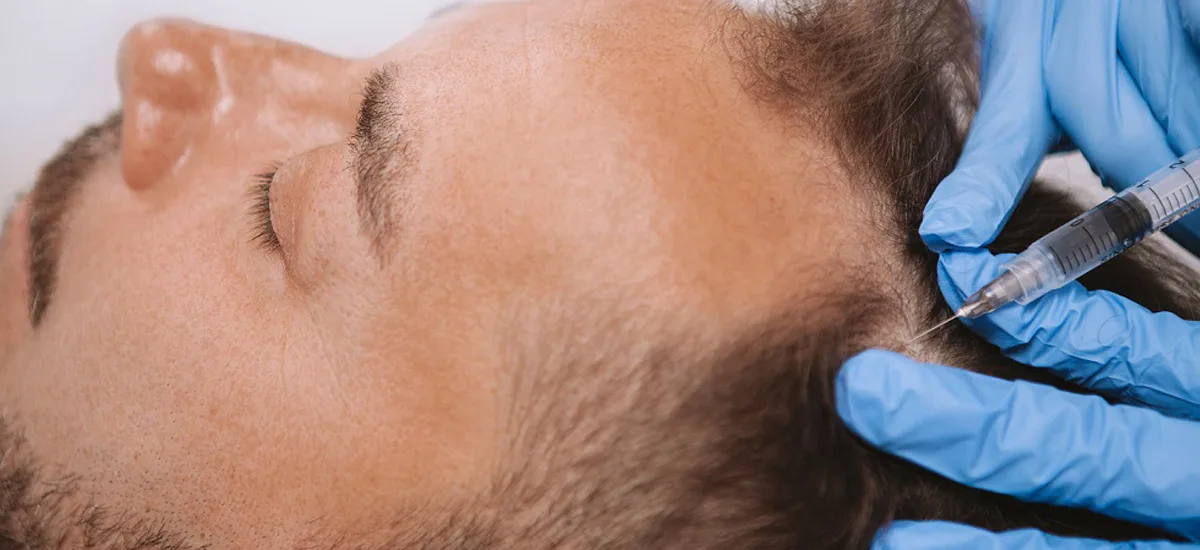
Hair loss can be due to several factors, among them heredity, hormonal problems (after a pregnancy, at the menopause, and so on), stress, and the thyroid gland. A common condition in men as in women, hair loss can mean anxiety and self-consciousness; many find it hard, because it significantly affects the appearance of the face. Some treatments used against this problem, such as drug treatments, have long been well known to the general public. PRP, or platelet-rich plasma, is a more recent option for fighting hair loss. Introduced first in sports medicine and then in anti-ageing medicine, this method can be applied in the field of hair restoration because of its benefits.
The PRP technique
PRP treatment, or platelet-rich plasma, consists of making use of the regenerative and revitalising properties that the platelets present in plasma (blood) have on tissue, and on the follicles of the scalp in particular. By injecting platelet-rich plasma into the areas where hair is falling, thinning or miniaturising, hair growth is stimulated: hair loss is limited in favour of regrowth and of better hair quality.
How a session works
During a PRP session, the patient's blood is drawn and then spun in a centrifuge so as to keep only the platelet-rich plasma. Since the plasma comes directly from the patient's own blood, there is no risk of allergy or side effect. That is one of the advantages leading more and more people to choose this method. The sample taken is then injected into the problem areas of the scalp, and it is there that the active components present in the plasma will act on the hair follicles to stimulate their growth. A PRP session lasts an average of 30 to 45 minutes and consists of a series of injections.
Results
The plan to follow is one session every 15 days for two months, then sessions further apart, at a rate of one every 3 months or more, though this varies with the patient and the condition of the hair.
After two sessions, hair loss is significantly slowed. After four sessions, the hair begins to grow back, stronger and silkier. Maintenance sessions are advised every year following the initial course of treatment, to sustain hair growth and prevent any recurrence.
Seek the advice of a specialist
Receive a free personalised diagnosis and an estimated quote prepared by Dr Seffen from your photographs.