

June 29, 2019
More detail on PRP treatment and how it works
What platelet-rich plasma contains, which patients benefit most from it, and the conditions under which it cannot be given.
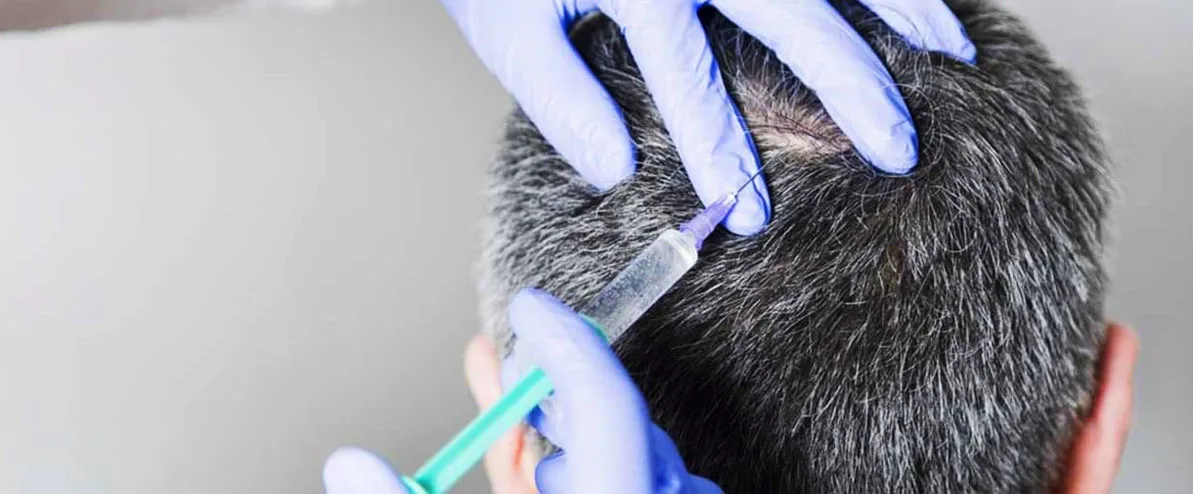
PRP treatment (platelet-rich plasma) is commonly used alongside aesthetic surgery or hair restoration, to aid healing and improve the quality of the result. Platelets, a type of blood cell, contain growth factors that can trigger cell proliferation, speed up healing and stimulate tissue regeneration in the treated area.
More detail on PRP treatment and how it works
What you should know
- PRP treatment has long been used to stimulate the healing process in cases of trauma or joint injury. The technique can address hair loss, stimulate the growth of transplanted hair and improve the quality of complementary treatments and care.
- The result given by PRP treatment is clearly visible after at least 6 months.
- Because the treatment uses the patient's own plasma, PRP injections are safe; they can be given alone or in combination with other treatments.
What exactly does PRP contain?
PRP is extracted from the blood; it is a concentrate of growth factors with a platelet concentration five times that of blood. PRP contains several fundamental proteins, such as platelet-derived growth factors (cell growth, repair and development of blood vessels, collagen synthesis), transforming growth factor β (growth and neogenesis of epithelial cells and vascular endothelial cells, stimulation of healing), vascular endothelial growth factor (stimulation of angiogenesis and healing), and cell adhesion proteins (fibrin, fibronectin and vitronectin).
Does PRP treatment have drawbacks?
The treatment protocol involves a blood sample, and temporary swelling may be seen in the treated area. Beyond that, PRP injections carry no danger and no after-effects.
Which patients benefit most from PRP treatment?
There are mainly two situations in hair restoration with PRP treatment: chronic hair loss (androgenetic alopecia in men and women) and acute hair loss (post-operative or post-pregnancy effluvium). Generally speaking, the patients with the best prospects of success from PRP treatment are those who show areas of weak hair growth on the scalp where hair follicles can still be seen. Patients with areas that have been bare for a long time are generally not the best candidates for the treatment.
What rules a patient out of the treatment?
The results of PRP treatment vary with the number of weak follicles in a particular region of the scalp. The treatment is contraindicated in cases of platelet or blood disorders, chronic liver disease, serious infection, haemodynamic or cardiovascular instability, and anticoagulant treatment.
Seek the advice of a specialist
Receive a free personalised diagnosis and an estimated quote prepared by Dr Seffen from your photographs.